


On this week’s show Paul talks to Preston Cooper about his new research on the Return on Investment (ROI) of a college education and the new report he has written which ranks US states by the ROI of their higher education systems.
Americans are paying far too much to attend college. Preston Cooper wants to change that.
In 2003, Americans owed $240 billion in student loans. That may seem like a lot. But in the first quarter of 2020, Americans owed $1.5 trillion in student loans: more than they owed in auto loans ($1.3 trillion) or credit card debt ($890 billion). Despite this staggering sum, colleges, universities, and vocational schools keep increasing their tuition and fees at rates that outstrip inflation or income growth.
“The federal government has fueled a boom in college tuition,” says Preston. “Federal aid is geared toward four-year college degrees, to the exclusion of better and more affordable options, like apprenticeships and work-based learning.”
Skyrocketing college tuition is doubly problematic because a glut of college grads has made it harder for those with high school diplomas or vocational training to land jobs they’re perfectly qualified for.
Preston grew up in Washington, D.C., in an economics-oriented household. His mother, Sheila Bair, was the acting chair of the Commodity Futures Trading Commission in 1993 under President Bill Clinton, and chaired the Federal Deposit Insurance Corporation under Presidents George W. Bush and Barack Obama, serving as a key policymaker during the 2008 financial crisis.
Preston majored in economics at Swarthmore College, where he learned firsthand about the rising cost of a college degree. “While I was in college, I kept thinking: ‘I love learning. I love building my skills. But there has to be a cheaper way to do this.’”
After graduation, Preston joined the think tank world, working for two years each at the Manhattan Institute and the American Enterprise Institute. In 2016, he joined Forbes as a Contributor, and in 2023, he earned his Ph.D. in Economics at George Mason University.
At FREOPP, Preston is a Senior Fellow, where he continues his work on making postsecondary education affordable and valuable for every American. He is best known for his pioneering work on returns on investment for college and university degrees that compare what they cost to what students earn after graduation. “I’m so proud to be part of a community like FREOPP’s that believes in unleashing the potential of every person through creative reforms.”

On this week’s show Paul talks to Preston Cooper about his new research on the Return on Investment (ROI) of a college education and the new report he has written which ranks US states by the ROI of their higher education systems.
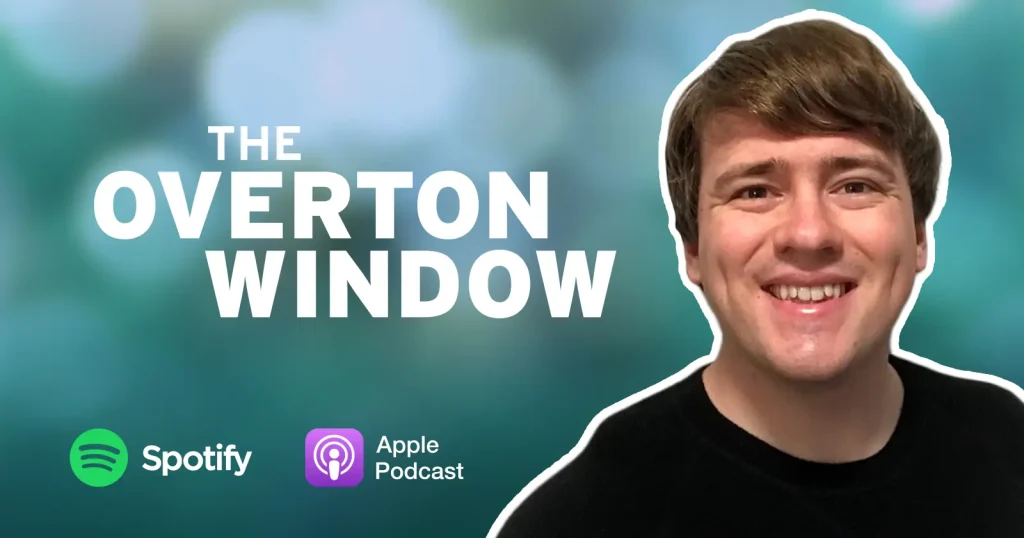
Preston Cooper on his plan to change federal college aid.

Many jobs which were open to high school graduates a generation ago now require a college degree.

The Gainful Employment (GE) rule is an important step towards stronger accountability for higher education, but it has some critical drawbacks

The three-year student loan payment moratorium will finally end in August, thanks to a last-minute bipartisan deal to increase the federal debt ceiling. The pause, which Congress authorized for six months at the beginning of the COVID-19 pandemic, was unilaterally extended several times by the Trump and Biden administrations. Despite the Biden administration’s assurances that...

Most college accreditors oversee hundreds of degree and certificate programs that leave students worse off financially.

A closer look at the data shows that the universities which draw the most funding tend to need it the least

An analysis of programs at schools serving disadvantaged students with a high return on investment.