


Key takeaways
- Social Isolation and loneliness pose serious consequences for mental, physical, and civic health.
- Being poor makes it more likely that a person will be socially isolated, and being socially isolated makes it more likely that a person will be poor. For those already poor, social isolation can make it more difficult to escape poverty.
- Those institutions that are central to social connection—family, work, community and civil society—are all undergoing radical changes that make it more difficult for Americans to form social bonds and connections.
- Policymakers can remove some barriers to social interaction and make it easier for people—especially low-income Americans—to build community ties and social networks. In particular, governments should support and encourage a greater role for civil society, often by limiting the role of government itself, and by prioritizing local programs over large national ones.
Executive summary
Social connection—the frequency, number, and quality of a person’s interaction with others—is a vital, if underappreciated, component of individual and community well-being. As former U.S. Surgeon General Vivek Murthy pointed out, “Social connection is a fundamental human need, as essential to survival as food, water, and shelter.”
Yet, for the past several decades, Americans have grown increasingly isolated and disconnected. Experts now speak of an “epidemic of loneliness.” The loss of social connection and associated rise in loneliness has had a host of social, cultural, economic, and civic consequences.
The ways in which social isolation and loneliness contribute to poverty need further study. However, there is substantial evidence of a relationship between social isolation and poverty running in both directions. Being poor makes it more likely that a person will be socially isolated, and being socially isolated makes it more likely that a person will be poor. For those already poor, social isolation can make it more difficult to escape poverty.
Reducing social isolation and loneliness will require significant cultural changes, most of which lie beyond government capability and action. However, policymakers can remove some barriers to social interaction, make it easier for people— especially low-income Americans—to build community ties and social networks.
Both public and private providers of social services should recognize the role that social isolation can play in limiting the ability of low-income Americans to escape poverty. States utilizing the One Door approach to welfare and work should incorporate efforts to reduce social isolation in their programs. Municipal governments should ensure access to public spaces as part of their planning. Local governments should also remove unnecessary barriers to multi-family housing and should prioritize walkable town centers. In addition, governments—at all levels—should support and encourage a greater role for civil society, often by limiting the role of government. Finally, local programs should be prioritized over large national ones.
Americans’ growing isolation
Although some researchers use the terms interchangeably, social isolation is not precisely synonymous with loneliness. Loneliness is more of a subjective feeling, a sense of distress brought on by a lack of emotional connection with others; people can feel lonely even when surrounded by people. Social isolation is a more objective measure of contact with a social network. Loneliness is often a result of social isolation and, in many of the contexts discussed below, a useful proxy.
According to the Kaiser Family Foundation, slightly more than half (53 percent) of U.S. adults say they have a lot or a fair amount of friends and family members living nearby who they can ask for help or support. But that still leaves 47 percent that say they have just a few or no friends or family in their nearby support network. The Survey Center on American Life reports that there has been a four fold increase (from 3–12 percent) since 1990 in the number of Americans who say they have no close friends. The number saying they had 10 or more close friends declined from a third to just 13 percent. And the number of Americans who say they have a “best friend” declined from 75 percent in 1990 to just 59 percent today. Similarly, researchers at Harvard estimate that from 2014–2019, the average number of hours Americans spend with a “close friend” fell from about six hours per week to just four.
By nearly every measure, social isolation has been growing. For example, a study by Viji Kannan and Peter Veazie of the University of Rochester found that from 2003 to 2020, social engagement with family, friends, and others decreased significantly. Companionship—defined as shared leisure and recreational experiences—also declined. This isolation translates into increased feelings of loneliness. According to an IPSOS survey of 3,000 adults aged 45 and older, 40 percent reported being lonely, up from 35 percent as recently as 2018. In a reversal of historic trends, men (42 percent) were more likely to be lonely than women (37 percent). In 2018, women (36 percent) were more lonely than men (34 percent). While the IPSOS survey focused on older adults, surveys show high rates of loneliness among younger Americans as well. Roughly 31 percent of those ages 18–29 report feeling lonely all or most of the time.
Other ways of measuring social disconnect yield similar results, For example, according to the American Time Use Survey, Americans spent an average of 285 minutes per day alone in 2003. That had grown to 333 minutes by 2020. The average time spent with friends fell from 60 minutes per day in 2003 to just 20 minutes per day in 2020. Increasingly, time online is replacing social interaction, especially for young people who are basically surrendering themselves to the whims and control of algorithms. This concerning trend—and its consequences for both individuals and society—is unlikely to be reversed any time soon.
Individuals with mental or physical health problems, people with disabilities, those who live alone, single parents, younger and older populations, and lower-income or financially insecure persons are most at risk to be socially disconnected.
At-risk groups also include racial and ethnic minority groups, LGBTQ individuals, rural residents, victims of domestic violence, and others who experience discrimination or marginalization. For example, African Americans experienced more social isolation and less social engagement, relative to Americans of other races.
Studies also show that younger men are particularly at risk. A 2024 Gallup survey, for example, found that a quarter of U.S. men ages 15-24 felt lonely the previous day, compared to just 15 percent of women in that age group. And the rate of loneliness among young people generally has increased every year since 1976. Historically, older Americans have reported the highest rates of loneliness, unsurprising since they often live alone and may have lost many friends and family members. But today, young adults are almost twice as likely to say they are lonely as those over age 65.
Significantly, lower-income Americans are far more likely to express feelings of loneliness and social isolation than those with higher incomes. Roughly 29 percent of those earning less than $30,000 per year fall into that group, while only about 18 percent of those earning $100,000 are. A study by the Kaiser Family Foundation found that adults living in households with annual incomes of less than $40,000 were three times more likely to say they are lonely than those from households with incomes above $90,000. Measured in a different way, studies show that individuals with incomes less than $25,000 per year spend considerably less time with companions and more time alone.
The consequences of social isolation
Humans are among the most naturally social of all animals. Strong social bonds help people live longer, healthier, and happier lives. Unsurprisingly, a lack of social connection can result in a host of negative outcomes for both the individual themselves and the larger community.
As Vivek Murthy warns:
“Loneliness is far more than just a bad feeling—it harms both individual and societal health….The mortality impact of being socially disconnected is similar to that caused by smoking up to 15 cigarettes a day, and even greater than that associated with obesity and physical inactivity. And the harmful consequences of a society that lacks social connection can be felt in our schools, workplaces, and civic organizations, where performance, productivity, and engagement are diminished.”
Consider just some of the adverse outcomes linked to social isolation and loneliness:
Mental health
Social isolation is a significant risk factor for a variety of mental health problems, including anxiety, depression, anti-social behavior, and cognitive decline. Neuroscience demonstrates that loneliness significantly impacts key areas of the brain, including the prefrontal cortex, amygdala, and hippocampus, leading to impaired cognitive functions such as memory, decisionmaking, and social cognition.
The consequences are stark. One study, for example, found that social isolation increases the risk of depression by as much as 50 percent. In addition, researchers at the Florida State University College of Medicine also found that loneliness is associated with a 40 percent increase in a person’s risk of dementia. Another study that followed older adults over 12 years found that cognitive abilities declined 20 percent faster among those who reported loneliness.
Physical health
Being isolated can lead to a significant increase in the risk of heart disease, Type 2 diabetes, autoimmune diseases, and neurocognitive disorders, among other conditions.
Numerous studies have found that social isolation and loneliness increase the risk of death from heart disease and stroke. According to the American Medical Association, social isolation is associated with a 29 percent increase in the risk of heart disease, a 32 percent increase in chances of a stroke, and as much as a 50 percent increase in the chance of developing dementia. Studies have even shown that social isolation and loneliness in youth can increase the risk of heart disease in adulthood.
A 2019 study for the American Cancer Society found that social isolation increases the risk of premature death from every cause for every race, roughly doubling for African Americans and increasing by as much as 84 percent for white Americans. That study concluded that “the magnitude of risk presented by social isolation is very similar in magnitude to that of obesity, smoking, lack of access to care and physical inactivity.”
Social isolation may even increase people’s susceptibility to contagions such as COVID, the flu, or even the common cold.
Suicide, addiction, and deaths of despair
The United States has seen a startling increase in the number of “deaths of despair”; deaths related to suicide, drug abuse, and alcohol-related liver disease have nearly doubled since 2000. For instance, despite a recent drop in overdose deaths last year, more than 77,000 Americans still died from overdoses. Another 50,000 died by suicide and more than 45,000 died from alcohol-related causes. All together, that adds up to more than 150,000 deaths of despair annually. In fact, if it were treated as a separate category, deaths of despair would now be the fifth leading cause of death in this country.
While social isolation certainly cannot be blamed for all of these deaths, there is no doubt that it is a contributing factor. For instance, social isolation and loneliness increase the risk of suicide by as much as 500 percent.
Social isolation also leads to an increase in addiction and substance abuse. A study by scholars at Texas Technical University, for instance, found that socially isolated individuals were significantly more likely to suffer from addiction to opiods, stimulants, alcohol, and even tobacco.
Social isolation does not just increase the risk of substance abuse and addiction, it also significantly increases deaths due to overdose. There are two well-documented reasons for this. First, the use of drugs in isolation means that there are unlikely to be others able to intervene, render assistance, or call for help in the event of an overdose. It has been estimated, for example, that adult drug users who lived alone had a 42 percent higher risk of overdose than drug users who lived with others. Second, social isolation can drive drug users to obtain their drugs from unreliable and unfamiliar sources, meaning those drugs might be more dangerous.
Political extremism and violence
Several studies have shown a relationship between social disconnectedness and susceptibility to ideological extremism, including the possibilities of violence. For instance, a 2021 RAND Corporation study of former political extremists found that fully half said that feelings of isolation and loneliness contributed to their radicalization.
Extremist groups understand this and use social disconnect and loneliness as recruitment tools. These groups can foster a deep sense of community based on shared grievances, providing a sense of belonging, togetherness, meaning, significance, and identity. Thus lonely people are both more motivated to find community in radicalized groups and are recruited on that basis.
Analysis of the writings of mass shooters has found that they expressed similar thoughts of alienation, isolation, and loneliness. One study by professors at Virginia Commonwealth University, for instance, looked at 177 mass shooters and found that social isolation was the “most important external indicator leading up to the attack.”
Even without going all the way to violence, social isolation can deepen political divides and lead to greater polarization. Several studies have shown that individuals expressing feelings of loneliness and isolation are more prone to believe conspiracy theories. For instance, the anti-vaccine movement is reinforced in part by a need for belonging. For example, studies by Emma Renstrom of Kristinstaad University in Sweden and others have found that “identifying with vaccine hesitants as a social group constitutes a psychological attachment to other individuals with vaccine hesitant attitudes.”
Economic costs
Social isolation carries an increasing economic cost. For instance, absenteeism related to loneliness and social isolation is estimated to cost the U.S. economy $154 billion per year. In addition, the physical and mental health issues identified above are costly as well. For instance, health issues related to loneliness results in an additional $6.7 billion annually in Medicare spending. Estimates suggest that social isolation costs the U.S. economy as much as $460 billion per year in health care, premature deaths, and lost productivity.
The causes of social isolation
For most of human history, human connection was a given, even inevitable. People were born with ties to family, village, town, and clan, and those ties remained throughout a person’s life. Indeed, it was often hard to escape them even if one wanted to. Today, there is much more of a need to seek out connectivity. At the same time, seeking meaningful connections has become more difficult and complex.
There are many reasons why social isolation has been increasing. As Alyssa Goldman, a researcher on social relationships at Boston College points out,“we’re spending less time with friends, we’re spending less time with family, we’re not volunteering as much as people were decades ago….people are living farther from their families than they did in the past. People are having fewer children. Marriage rates are down.” All of these factors play into social isolation.
Technology and social media
Technology, particularly social media, is evolving rapidly and its impact on social isolation is complex and more nuanced than commonly portrayed. Online connectivity and social media can expand social networks and offer access to communities of interest beyond local horizons, especially for people with disabilities and marginalized communities. It can make it easier to maintain social contact with friends and relatives over long distances. But it can also be a barrier to social interaction.
According to a Pew survey, 85 percent of Americans say that they are online daily, including 48 percent who go online several times per day, and 31 percent who are online “almost constantly.” On average Americans spend six hours per day on social media. Younger Americans and lower-income Americans spend even more.
Much of the time spent online is not texting, emailing others, or other types of social interaction—even if remote. Rather, as much as five hours per day is spent passively watching videos and other streaming entertainment.
In addition, psychological studies have indicated that the tendency of social media to encourage people to compare themselves to others in ways that increase feelings of isolation. One study, for example, found that those who used social media for more than two hours per day were twice as likely to report feelings of loneliness and isolation than people who used it less than 30 minutes per day.
The rapid rise of advanced AI will pose both opportunities and additional challenges.
Some see AI as a potential solution for loneliness. Certainly, it may provide short-term emotional support for specific vulnerable populations, such as older adults, populations with disabilities, marginalized and excluded groups, and those dealing with personal tragedies or loss, such as those with health issues that prevent them from leaving the house. This may also apply to those who are dealing with bereavement issues or personal problems that are too painful for some to broach publicly.
But for all its advantages, neither being online nor AI suitable substitutes for human connection. This is true even when AI gives the online experience a verisimilitude of reality. As MIT sociologist Sherry Turkle told the Harvard Gazette, “Face-to-face conversation is where intimacy and empathy develop.” As one randomized trial found, while some AI features moderately reduced loneliness in the near-term, heavy daily use led to increased loneliness, dependence, and a reduction in real-world socialization.
Changing families
For most Americans, families are their first, longest, and most important social connection. However, the nature of the American family has changed significantly in recent decades for both cultural and economic reasons.
Marriage rates have been declining for some time. As of 2021, just 53 percent of American adults were married, while another nine percent were unmarried but living with a partner. To compare, as recently as 1990, two-thirds of Americans were married, and four percent were cohabiting. Of course, the unmarried population includes some previously married people, but all of the growth in the unpartnered has been the result of an increase in the number of never-married men and women. Particularly troubling, the decline in marriage rates has declined significantly faster among lower income and lower education Americans. At the same time, those higher income, higher education couples who tend to marry in much higher numbers, also tend to marry later in life. The median age for first marriages is 30.4 for men and 28.6 for women, compared to 23.3 for men and 20.9 for women in 1970. There are many factors driving these changes; some are subject to government action, but most are not.
As a result, couples are having fewer children. The average U.S. family size in 1960, for instance, was 3.67 people. Today it is 3.13. That means more children growing up in a one-child household or with fewer brothers and sisters than was the case in the past. Surveys show that children growing up as an only child report much higher rates of loneliness than those with siblings.
Of particular note is the rise of single-parent households. In 1970, two-thirds of prime age adults (ages 25–49) lived with a spouse and children. Today, just one-third do. Concomitantly, the share of children born outside marriage has increased from roughly 28 percent in 1990 to more than 40 percent today. Add-in children born to married parents who subsequently divorced, and roughly half of all children are growing up in households headed by single women. There were roughly 7.3 million single mothers and 1.6 million single fathers as of 2023 .
According to the American National Family Life Survey, children raised in single-parent homes are more likely to report having felt lonely growing up than those raised in two-parent households, and those feelings often carry over into adulthood.
Divorce also plays a role beyond simply increasing the number of single-parent households. Research has shown that children in divorced households struggle to maintain social contacts and are more likely to experience disconnectedness and loneliness. For example, a 2021 survey found that 52 percent of children felt lonely at least once or twice a month. Significantly, although overall divorce rates have declined since their peak in the 1970s, divorce rates remain high for lower-income couples. Roughly 45 percent of couples with incomes under $10,000 per year divorce compared to under 30 percent for those in the top quintile of earnings.
Overall, the combined effect of all of these family changes has resulted in an average of a five hour decrease in family social interactions per month since 2002.
A look at changes in how married couples initially meet shows the role that social isolation can play in reducing marriage possibilities for the isolated. For example, roughly 20 percent of married couples met through mutual friends; 11 percent at work; 9 percent at school or college; and 7 percent through other family members. All these introductory opportunities are lower for those without social networks.
As with so many other issues of social isolation, the problem runs in both directions. Smaller and more distant families increase social isolation, while social isolation makes family formation more difficult.
It is also important to point out that the changing nature of families is particularly problematic for men, since they tend to rely on spouses and other family members for companionship more than do women. This is, in part, due to cultural beliefs tied to gender that can lead to the belief that sharing feelings is unmasculine.
Changing workplaces
The workplace has long served as a source of social connection. A locus for daily interaction and shared experience, it can serve as the basis for sense of purpose and belonging, a source of emotional support, and an opportunity for friendships. More than one quarter of workers report at least one close friend at work, and a slightly larger percentage say they see work colleagues outside of work at least monthly.
It is troubling, therefore, that work-related social interaction is declining. Today, at least 43 percent of workers say that they don’t feel connected to others at work. And in a 2022 survey for Glassdoor, employees rated “connection at work” as a “pro” of their company only half as often as they did three years earlier.
This trend has been greatly accelerated by the COVID-induced move to remote work and work-at-home. And, while there has been some return to the office since the pandemic bottomed out, more than one-in-five U.S. workers still work remotely. This is unlikely to change significantly in the future. Roughly three-quarters of those working from home claim they would quit if they no longer could do so.
However, remote workers are also more likely to say they feel isolated or lonely as a result of working from home. In fact, remote workers reported feeling lonely 98 percent more often than their fully onsite coworkers and 179 percent more often than those in hybrid jobs, according to Ringover’s 2024 Loneliness at Work survey. Initially this was mostly a problem for higher-wage workers. The type of jobs frequently held by low-wage workers—manual labor or customer interface—are difficult to shift to home work. But the changeover is beginning to trickle down to more to more lower-income jobs, such as customer service, data entry, and commission sales.
In addition, the rules of the workplace have changed in important ways in recent years. The #MeToo movement has done an enormous amount of good by better protecting women from harassment, abuse, and unwanted sexual pressure. But it has also made many workers more cautious about interacting with their coworkers. One study from the National Bureau of Economic Research found that 22 percent of men and 44 percent of women felt that #MeToo would result in women being excluded from work-related social activities.
And, even as work is providing fewer opportunities for social interaction itself, it is also pulling workers away from other avenues for connection. For example, longer hours and increased work demands can interrupt people’s traditional social networks. Travel or having to move for jobs can cause an even more dramatic break with local friends, family, or coworkers.
This is undoubtedly aggravated by increasing costs of living, which can force struggling Americans to prioritize the work side of the work-life balance. The nine million Americans who work two or more jobs have less time for social activities.
And, as noted above, the growing use of AI in business will pose additional challenges.
A series of studies published in the Journal of Applied Psychology suggests that AI systems in the workplace can result in more loneliness and social disconnection. Researchers found that the more employees collaborated with AI, the more they felt socially isolated and lonely.
The bottom line is that the workplace is no longer a reliable source of social connection where people meet others and develop relationships.
The fading of civil society
In his widely discussed book Alienated America, Tim Carney posits that a church closing its doors is more harmful to a community than a factory doing so. The idea is that a resilient community can survive and come back from economic hardship more easily than from the loss of civic institutions and the decline of civic connection.
Whether or not one agrees with Carney’s specific formulation, it is impossible to deny that social isolation has also been hastened by the decline of civil society. The decline is seen in many of the institutions that long formed the backbone of civil society, such as churches and religious organizations, clubs, fraternal organizations, benevolent societies, and labor unions.
Civil society was long an intrinsic part of the American landscape. As Alexis de Tocqueville wrote:
Americans of all ages, all conditions, all minds constantly unite. Not only do they have commercial and industrial associations in which all take part, but they also have a thousand other kinds: religious, moral, grave, futile, very general, and very particular, immense and very small; Americans use associations to give fêtes, to found seminaries, to build inns, to raise churches, to distribute books, to send missionaries to the antipodes; in this manner they create hospitals, prisons, schools. Finally, if it is a question of bringing to light a truth or developing a sentiment with the support of a great example, they associate.
Civil society in the sense that de Tocqueville described was important for the formation of community bonds. As the congressional Joint Economic Committee has written, civil society organizations
“help to cultivate relationships between people who may not otherwise meet but for their common membership in an organization. Indeed, civil society—particularly its most participatory forms—serves as a locus of community life. It increases social relationships and interactions, even across traditional lines of social segregation. Members develop relationships with those alongside whom they worship, compete, serve, learn, and work.”
But that sense of community and civic involvement has waned in recent years. For instance, less than half of Americans now say they belong to a church, mosque, or synagogue, down from 70 percent in 1999.
Fraternal organizations such as the Masons, Odd Fellows, Knights of Columbus, and Moose Lodges—once ubiquitous features of American community life—have seen drastic decreases in memberships. Nearly five percent of American men once belonged to the Masons, for instance. Today Masonic membership is down 75 percent since its height in 1959. As workers see less and less value and benefit from labor unions, membership hit a record low in 2024, just 9.9 percent of workers. As recently as the 1980s, one in five American workers belonged to a union. There are good and bad aspects to all of the groups, but they did provide an opportunity to form bonds with others in the community.
Other aspects of civil society are also in eclipse. Less than one-quarter of Americans currently volunteer in their community, the lowest level in more than two decades. This is not a question of declining generosity or lack of charity. America remains one of the world’s most generous societies, giving nearly $593 billion to charitable causes in 2024. But increasingly the outlet for that charitable impulse is to write a check, not community involvement.
Of course, volunteering took a major hit during the pandemic, but that merely accelerated a decline that has been going on for far longer.
There is also an increasing class divide when it comes to participation in civil society. Volunteerism is lower in economically disadvantaged communities with higher poverty rates than it is in communities with higher and more equitable economic activity. This is in some ways counterintuitive: there is a general belief that communities come together in hard times, but that appears to be more likely in cases of natural disasters or other one-off emergencies, rather than long-term economic conditions. In addition, Americans with higher incomes and higher education are also more likely to volunteer, as are married individuals. This means that precisely those people who are most in need of additional social connection are the people least likely to find it through volunteerism. Volunteerism has also been declining more rapidly in rural areas than in urban ones. Until recently, rural communities had significantly higher rates of volunteerism than their urban counterparts, but that has almost completely disappeared.
There are several reasons for the decline in volunteerism. Most are the same factors driving social disconnectedness generally: increased use of social media and technology, a decline in community ties and mediating institutions such as churches and extended families, and, of course, the effects of COVID-19.
Even where civil society remains active, there has been a change in focus. Many civil society organizations, especially those involved in social services, have become increasingly professionalized, shifting from broad-based member-driven operations to ones managed by professional, usually college-educated staff. Not only does this reduce opportunities for average citizens to participate, it often moves the organization from local community needs to broader national issues.
At the same time, the government increasingly displaces civil society. As the Joint Economic Committee has noted, “is at least partially attributable to the expansion of government, which evolved to serve specific needs that civil society used to fulfill.”
Perhaps the most obvious example is the fate of African-American lodges and fraternal organizations. For much of the nation’s history, African Americans were excluded from most social welfare programs, so they relied on their own charitable institutions. Among the most active and successful of these were mutual aid societies, lodges, and fraternal organizations. These organizations—such as the Prince Hall Masons and segregated branches of the Odd Fellows, Moose, Elks, and similar groups—played important roles in African-American communities since the first black Masonic Lodge was established in Boston in 1792. Early in the 20th century, many of these groups could boast hundreds of thousands of members. At one point, nearly one-third of all adult black men in southern states were members of the Prince Hall Masons.
These black fraternal organizations provided a wide variety of social services,both to their members and to the African-American communities at large. They built orphanages and old-age homes. They provided food to the hungry and helped the unemployed find work. One of their most important benefits was providing “death benefits,” a form of life-insurance. A 1910 article in Everyman Magazine explained, “Rich men insure in big companies to create an estate. Poor men insure in the fraternal orders to create bread and meat.”
Most black fraternal organizations also provided a form of health insurance known as “lodge practice medicine.” Members would pay a small monthly fee to the lodge, which would contract with a doctor, who would then treat lodge members and their families. As a result of the influence of black fraternal organizations, African Americans were actually more likely to be insured than white Americans during the first part of the 20th century.
Immigrants and other groups that were routinely excluded from public charities devised similar private institutions, including Mexican-American Penetente Lodges, Chinese companies and tongs, and organizations in the Irish, Slovak, Polish, and Italian communities.
However, as the federalization of welfare made government benefits increasingly available to African Americans and other previously excluded groups, the social services missions of the lodges were supplanted and most gave up those activities. Consequently, their membership and influence declined dramatically. Today, for example, only about 200,000 black men belong to the Prince Hall Masons, down from a peak of some four million in the 1950s.
Of course, the crowding out of African-American fraternal organizations took place a long time ago. But, the experience is illustrative of a larger trend throughout civil society. When the government takes over responsibilities that traditionally belonged to families or communities, the “web” of local expectations and mutual support frays and eventually disintegrates.
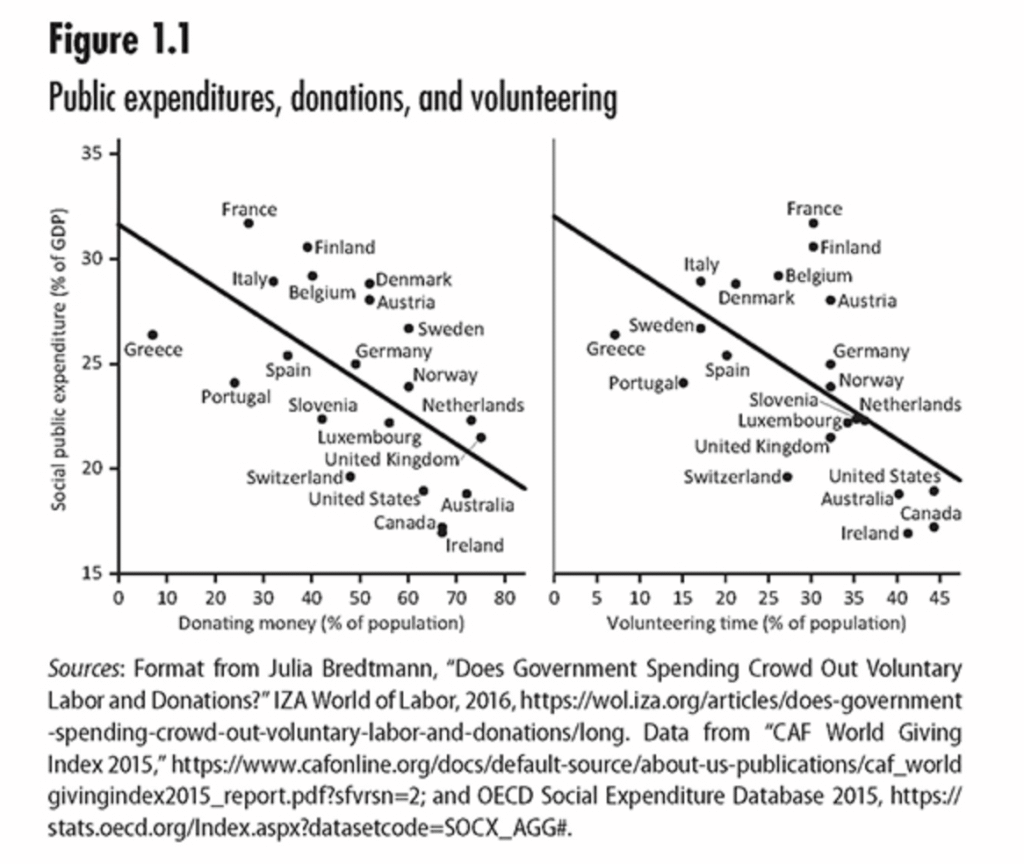
Although there are academic disagreements about how much “crowding out” there is, evidence suggests that government social welfare interventions reduce private charitable efforts. For example, some studies show that among countries with higher levels of government social expenditures have a lower proportion of their populations who donate to charity, or—particularly important in the context of social connection—volunteer. (Figure 1.1)
This is not a call for mindlessly slashing social welfare programs and hoping that private charities can pick up the difference. But it does suggest that sometimes the best thing for a community might be for the government to do less and the community to do more.
COVID-19
There is no doubt that the recent pandemic, and the social distance and quarantine measures that accompanied it, accelerated the trend to social isolation. As the National Academy of Sciences put it, “The pandemic’s impact on social isolation and loneliness was immediate and has persisted long term.” At least 9 of 12 major post-pandemic studies have found a significant increase in social isolation not just during the pandemic itself, but in its aftermath.
Efforts to slow or reduce the spread of COVID included many policies that deliberately reduced human connections. This included closing many businesses, moving to at-home work, and prohibitions on many social gatherings like churches,concerts, and sporting events. Virtually no aspect of normal societal functioning was spared in much of the United States. Even when people did gather in public, they were urged to remain six feet apart and universal masking discouraged interpersonal connections. Even where socially isolating policies were not explicitly mandated, fear of contagion often kept people apart.
Whether or not those measures were necessary or should have been so widely and rigidly implemented is questionable. FREOPP’s research has suggested that many of the responses to COVID were overblown or counterproductive. Regardless, those measures significantly reduced social contact by design. This is particularly ironic since at least one study has shown that a lack of social connection with neighbors and resultant loneliness was associated with weaker antibody responses to the COVID-19 vaccine.
Self-reported loneliness spiked during the pandemic and has declined since, but remains much higher than it was pre-COVID. To some degree, people simply unlearned the skills useful in making social connections. That may improve as the pandemic fades further into the past.
However, many of the isolation measures put in place during the pandemic have been difficult to bounce back from. For example, there has been a reluctance by employees to return to the office. Children lost valuable years of learning and socialization skills as a result of school closures. The required masking of even very young students exacerbated this problem. As a result, many young people still report difficulty in making friends and socializing. Adults too reported that they feel more awkward in crowds or meeting people. And, because other forms of communication were limited during the pandemic, many people became far more reliant on digital communication and online social platforms. That increased use of social media during lockdowns has continued its hold.
COVID and the response to it clearly reduced social interaction and increased isolation, magnifying nearly all of the trends leading to greater loneliness. But perhaps more important, the legacy of that social loss is still affecting Americans today.
Social isolation and poverty
David Nettle of the University of Northumberland and the Institut Jean Nicod in Paris suggests that social support and income are both resources, and to some degree are substitutable, especially in the short-term. If a person lacks income, friends and family may be able to help them. On the other hand, if a person does not have access to a social network, money may help them access the resources they need. It is, of course, not a perfect substitution, but it does suggest that social isolation can exacerbate or otherwise affect poverty.
The relationship between social isolation and poverty runs in both directions. That is, being poor makes it more likely that a person will be socially isolated, and being socially isolated makes it more likely that a person will be poor. And, for those already poor, social isolation can make it more difficult to escape poverty.
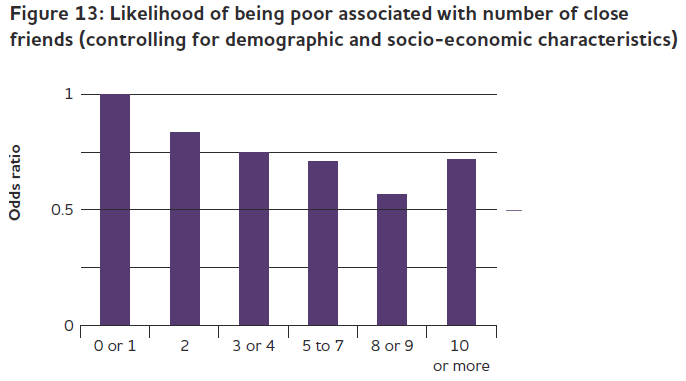
Social isolation negatively affects all three branches of the “success sequence;” the hypothesis that education, employment, and marriage before having children—in that order—are key to avoiding poverty.
For example, socially isolated students and those reporting significant degrees of loneliness perform more poorly at school and are more likely to drop out. Those who graduate high school are less likely to go on to college, and those who matriculate are more likely to leave without a degree. This appears to be particularly the case for young men.
Lonely and disconnected people are more likely to be unemployed or have a higher risk of unemployment. Studies show that lonely individuals are more likely to become unemployed, with the risk increasing for those with sustained feelings of loneliness. Unmarried individuals report higher levels of loneliness than their married counterparts. Unsurprisingly, divorced or widowed individuals were especially likely to report feeling lonely.
Social disconnectedness also makes it more difficult to escape poverty. Socially disconnected people are, almost by definition, likely to have a much smaller social support network to fall back on during hard times. For example, according to the American Social Capital Survey, just 57 percent of Americans say they know someone that they could count on to lend them $200.
This lack of network is also problematic because social connections can help open many doors that would make it easier for low-income families to move up the economic ladder. Simply put, social connections can act as a bridge to opportunities that people might not otherwise be aware of. This is particularly true in low-income communities where information on job or educational opportunities does not circulate as freely and openly as in more economically mobile communities.
For instance, Steve McDonald of North Carolina State University found that “individuals who used their social networks to search for jobs experienced significantly higher wage returns in comparison to those who found employment on their own. By the same token, social capital provides access to exclusive information about job openings which reduces the competition in the labor market.”
The negative consequences of social isolation also tend to hit low-income Americans harder, perhaps because they have fewer other resources to mitigate those consequences. For example, studies have shown that social networks are particularly important for alleviating depression and physical pain which often results from social isolation.
Moreover, when social isolation and loneliness are combined with poverty, there is an increase in risky behavior like substance abuse that can make it more difficult to escape poverty. The combination of poverty and loneliness can also lead to an increase in physical and mental health problems. In many ways, poverty and social isolation feed on each other and make their associated problems worse.
Nor should policymakers ignore the impact of social isolation on the most important tool for reducing poverty: economic growth. One three-year study of 26 cities in the United States found that those with the highest levels of connectedness among residents also had the greatest growth in GDP during the study period. Another study found that communities with a high degree of social connectedness were better able to recover from economic downturns and periods of increased unemployment.
As noted, the poor are more likely to be socially isolated, and for two key reasons.
First, people living in poverty are likely to lack the resources necessary to participate in community and social activities. They may not be able to afford transportation, admission fees, or even proper clothing. And, as noted below, low-income communities often lack the infrastructure necessary to support social connections, from parks to coffee shops. A Danish study concluded that, compared with the general population, residents of low-income neighborhoods had higher levels of loneliness. And British researchers have pointed out, “Social networks cannot be viewed in isolation; broader inequalities, including in education and employment, shape the networks that people have access to[.]”
Second, there are frequent feelings of shame, anxiety, and stigma accompanying poverty. These feelings are often reinforced by public attitudes and policies that treat poverty as a moral failure rather than the result of adverse circumstances. These feelings can cause people to withdraw from larger society, fearing judgment or condemnation. If such feelings are internalized, leading to lower-self esteem, it frequently leads to a passivity that reduces organizational, civic, and social activities.
All of this sets up a vicious circle. Social isolation makes it harder to escape poverty, which makes people more socially isolated, which makes it harder to escape poverty, and so on.
Fostering social connection
By almost any measure, Americans would benefit from a reduction in the number of people who are lonely and socially isolated. Moreover, reducing social isolation is an important component in any effort to reduce poverty. Therefore, tackling social isolation and fostering greater interconnectivity should be a policy priority.
Solving social isolation and increasing connectivity will mostly require a cultural response. The government cannot make people interact or form relationships. Policymakers should be wary of attempts to regulate out of social isolation by restricting the availability of social media or requiring returns to the office.
That said, there are limited but important steps that the policymakers can take to help foster greater social connectivity.
Build with social connection in mind
The need for social connection should be considered by municipal planners. That is, towns and cities should attempt to incorporate locations where residents may easily meet and congregate such as parks, hiking trails, community and civic centers, libraries, performance spaces, dog parks, community gardens, and so on. Even markets, restaurants, bars, and coffeeshops, are important sources of social interaction.
Currently, too many Americans face “civic deserts.” More than one-in-five Americans currently says that they live in neighborhoods with no access to public or commercial spaces that form the basis for community activity. Another third say that they have minimal access to such spaces. People living in these areas say that they find it much more difficult to meet or talk with their neighbors.
There are significant class disparities in access to social infrastructure. Americans with college degrees and higher incomes are considerably more likely than those with less education and lower incomes to report that their neighborhood allows easy access to a variety of public spaces. To cite just one example, high-poverty neighborhoods in New York City have 21 percent less access to parks than wealthier neighborhoods. In addition, rural areas, for reasons of distance, logistics, and poverty, are more likely than urban ones to lack social spaces, often depriving the people living in those areas of access to important social opportunities.
Raj Chetty and others have shown income-based residential segregation reduces social connection both overall and between income groups. For instance, less than two percent of the friends of individuals in the bottom ten percent of incomes are in the top ten percent. While not surprising, this can nonetheless have serious consequences for low-income families. Chetty explains that “children who grow up in communities that are rich in bridging social capital—where low-income families are more likely to interact with high-income families—have significantly better chances of rising out of poverty.”
Therefore, local lawmakers should remove barriers to multifamily housing—such as exclusionary zoning—in order to facilitate the sort of denser multi-use, walkable communities that can bring people into contact with one another. Even the addition of an accessory dwelling unit can make it easier for families—especially young adults or older parents—to live in proximity to each other.
Integrate social connection with One Door policies for social services
One of the most successful welfare reforms in recent years has been the development of the One Door model for providing social services Adopted originally by Utah and to some degree by a handful of states since, the One Door model consolidates multiple welfare programs into a single point of contact that integrates welfare, workforce, and social support programs. This ensures that recipients are able to access necessary benefits in a manner that is dignified, non-bureaucratic, and easily maneuvered, while also enabling them to be steered toward work and given other steps that will provide long-term poverty relief. Where implemented, the One Door model has demonstrated an ability to move low-income Americans from welfare to work while ensuring that their basic needs are met. One Door models have also been shown to save states money over the long term.
States utilizing one door approaches to welfare are uniquely positioned to integrate the need for social capital in their efforts to lift people out of poverty. By integrating job training, education, and social assistance, the One Door model can link individuals seeking assistance to a wider number and variety of social networks than they would otherwise be able to access. Moreover, because One Door emphasizes repeated interactions between recipients and program staff and case workers, it builds trust and relationship with participants. The One Door model also emphasizes a holistic approach to helping those in need. As a result, it is set up to address many of the underlying causes of social isolation, such as unemployment, housing instability, substance abuse, and mental health issues.
Those administering One Door programs should ensure that frontline workers are trained in issues around social connectedness, and understand its role in developing strategies to get families out of poverty.
Allow space for civil society
Tim Carney warns of the dangers of the growing reliance on government: “the more power the central state takes away from civil society and local community, the more people have to spend their time on the central state. The more everyone’s attention shifts toward the central state, the more local communities and civil society are neglected.”
Sen. Bernie Sanders (I., Vt.) once famously said, “I don’t believe in charities,” arguing that the government should be responsible for social welfare and other efforts to improve society. Suspicion of civil society is not merely a phenomenon of the left. Some on the right have increasingly become hostile to charities and other non-governmental organizations that they believe are too liberal, and consequently advocate for a more robust role for government in society, albeit in line with their preferred ideological priors.
In either case, replacing civic society with government is a mistake. Even setting aside evidence that private charity is often more effective than government programs at addressing the underlying needs of people in poverty, government programs can never generate the personal ties and connections formed through local charitable activities.
This is not a call for mindlessly slashing social welfare programs in the hope or expectation that private charities can pick up the difference. But policymakers should consider how new programs or additional social welfare spending will impact existing societal structures.
Localize, localize, localize
As a general principle, social welfare programs tend to be more effective the closer they operate to the community or to the individuals they serve. This is undeniably true when it comes to issues of social isolation and loneliness. One-size-fits-all national programs are unlikely to address any local conditions that contribute to social isolation.
Unfortunately, for at least the past century, public policy has moved increasingly away from reliance on the local, small-scale institutions that Edmund Burke called “little platoons.” Motivated by a belief that the problems of society are too big and complex to be solved by common men, policymakers turned increasingly to the “experts” who could understand problems and develop solutions. This was not simply a shift from civil society to government. Private charities also professionalized and centralized their efforts. Professionalization undoubtedly provided benefits in terms of scale and efficiencies, but at a price of reduced involvement at the community level.
Local governments and community-based organizations do much more than provide “on-the-ground” resources. They also foster a sense of trust and community.
The greater the reliance on centralized national programs, the more policy becomes enmeshed in partisanship and the political divisions of the day. Because national policymakers rarely interact directly with people outside their red or blue bubbles, political debates are inevitably less about human beings and more about ideology or partisan identity. At the same time, if concerned citizens want to change policy, they are less likely to try to work out differences at the local level, instead racing to Washington in search of the legislator or regulator that can impose a solution. This inevitably leads to a further erosion of comity and trust.
For example, a survey of local elected officials conducted by the Carnegie Corporation of New York found that 87 percent of respondents believed that political polarization had a negative impact on the country, but just 31 percent felt that way about their local communities. And an analysis of local versus national political language by Oxford Academic found that national politics tended to use more “abstract, moralized, and power-centric” themes and language. This, in turn, led to more anger and negativity. Local political leaders, on the other hand, tend to use more neutral language and focus more on concrete and evidenced-based results, promoting a less polarized environment.
Moreover, local institutions generally deal directly with neighbors and others that policymakers know personally. This familiarity makes for greater pluralism and a willingness to work with people of very different backgrounds and beliefs. In the process, it builds exactly the sort of relationships that can reduce social isolation.
Conclusion
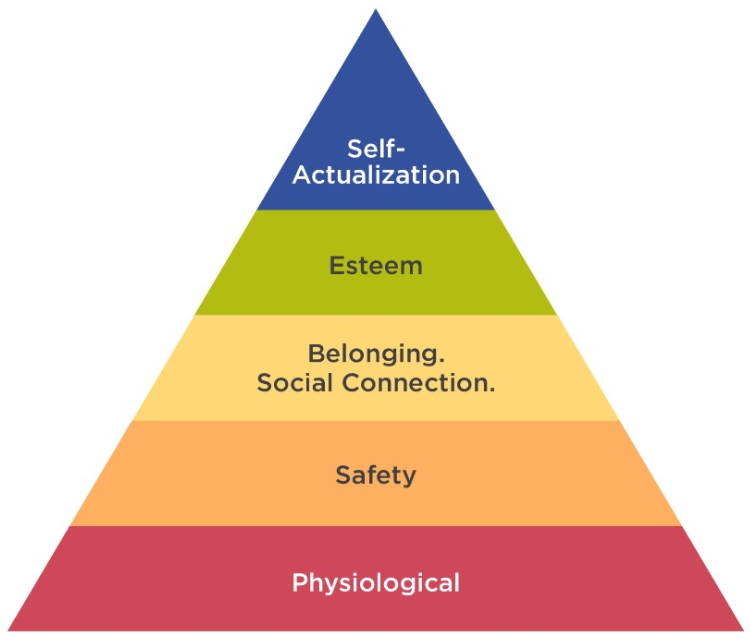
Social connection is vital to human flourishing. As writer and lecturer Robert Waldinger puts it, “The good life is built with good relationships.” Or as the Harvard Study of Adult Development notes, “The number-one predictor of happiness is quality time we spend with people we care about and who care about us.” According to Maslow’s hierarchy of needs, social interactions are in the third tier, trailing only physiological and safety needs in importance.
Yet, those institutions that are central to social connection—family, work, community and civil society—are all undergoing radical changes that make it more difficult for Americans to form social bonds and connections. As a result, Americans are increasingly disconnected and lonely.
The consequences of disconnectedness have been stark: declines in mental and physical health, a rise in deaths of despair, political polarization, and sometimes violent extremism, among other social maladies. Social isolation also contributes significantly to poverty, both pushing Americans into poverty and making it harder for them to climb out.
An effective antipoverty agenda, therefore, should take social disconnectedness into account. Of course, there are limits to what government action can hope to accomplish in building bonds between Americans. The complexities of human relationships are not generally responsive to the levers of government regulation or spending.
Ultimately, reducing social isolation will require a cultural shift that will only come about if Americans take steps to reach out and connect with others. But there are some things that policymakers, especially state and local policymakers, can do to make it easier for Americans to take those steps.
Both public and private providers of social services should recognize the role that social isolation can play in limiting the ability of low-income Americans to escape poverty. States utilizing the One Door approach to welfare and work should incorporate efforts to reduce social isolation. Municipal governments should ensure access to public spaces as part of their planning. Local governments should also remove unnecessary barriers to multi-family housing, and should prioritize walkable town centers. In addition, governments, at all levels, should support and encourage a greater role for civil society. And, finally, local programs should be prioritized over large national ones.