


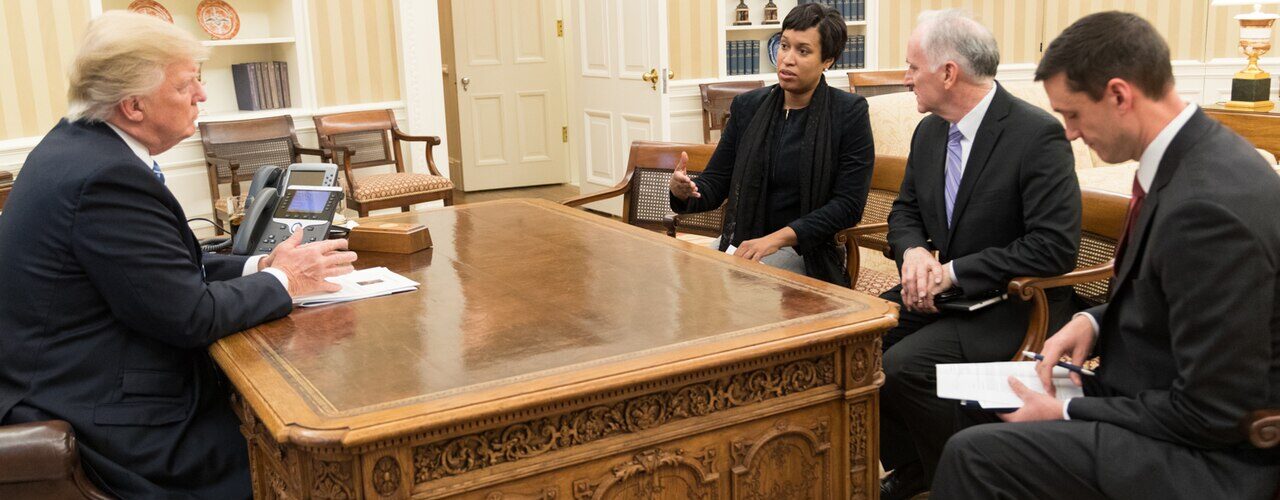
In 2027, students across the country may have access to better opportunities to learn, including scholarships to attend new schools and grants to pursue tutoring, summer school, and extracurricular enrichment opportunities. But access depends on whether their community is eligible to receive funding through the new federal scholarship tax credit established under the One Big Beautiful Bill Act of 2025. That decision is up to each state’s governor or, for those of us who live in the District of Columbia, Mayor Muriel Bowser.
Several Democratic governors announced that their states would forgo participation, generally opposing parents choosing alternatives to public schools. But some of these state leaders are now reconsidering their position following Governor Jared Polis'(D., Colo.) vocal advocacy for participation in the program.
Here in the nation’s capital, Mayor Bowser is finishing her third term in office and has announced that she will not run again. While she has not yet taken a position on the federal scholarship tax credit program, she has an opportunity to ensure that disadvantaged children have access to better educational opportunities. She can do so by continuing a longstanding bipartisan tradition of supporting parents’ ability to choose the right learning environment for their children.
Thirty years ago, Congress and President Bill Clinton enacted the District of Columbia School Reform Act, establishing one of the nation’s first public charter school systems. In 2003, Congress and President George W. Bush enacted the D.C. School Choice Incentive Act, with strong support from then-Mayor Anthony Williams and City Council member Kevin Chavous. That law created the Opportunity Scholarship Program, which allows children from low-income families to attend private schools. The law also provided additional federal funding for public schools and charter schools. Today roughly 1,200 students participate each year, and more than 12,000 D.C. students have used federally funded opportunity scholarships since 2004.
While opponents of parental choice in education opposed both the 1996 and 2004 laws, generations of D.C. students have benefited from these programs. The programs have proven broadly popular with D.C. parents. Today, nearly half of the District’s students attend public charter schools. A federally mandated review of the Opportunity Scholarship program found that children offered scholarships were more likely to graduate from high school and that parents were more satisfied when they chose their child’s school.
Looking forward, more D.C. students and families would benefit from the new federal scholarship program should D.C. participate. Notably, Mayor Bowser could structure the District’s participation in a way that expands opportunity and prioritizes the most at-risk students.
Recent national test scores show that children from low-income households continue to struggle to achieve basic proficiency in elementary and middle school. Roughly seven in ten economically disadvantaged 4th graders scored below basic in reading on the 2024 National Assessment of Educational Progress; among 8th graders more than half scored below basic.
The new federal law provides discretion to direct which scholarship granting organizations are eligible to receive donations through the new federal tax credit. Mayor Bowser should focus new funds on helping low-income children, children with disabilities, and other at-risk student groups access private school scholarships, tutoring, and summer enrichment programs.
Under federal law, D.C. taxpayers would be allowed to receive tax credits for donations to scholarship granting organizations. The only question is whether children living in D.C. will be able to benefit. Governor Polis called the decision a “no brainer.” For Mayor Bowser, it’s better than that as she finishes her term: it is a historic opportunity to continue the District’s longstanding bipartisan support for parental choice in education and help the most at-risk children in the nation’s capital.