


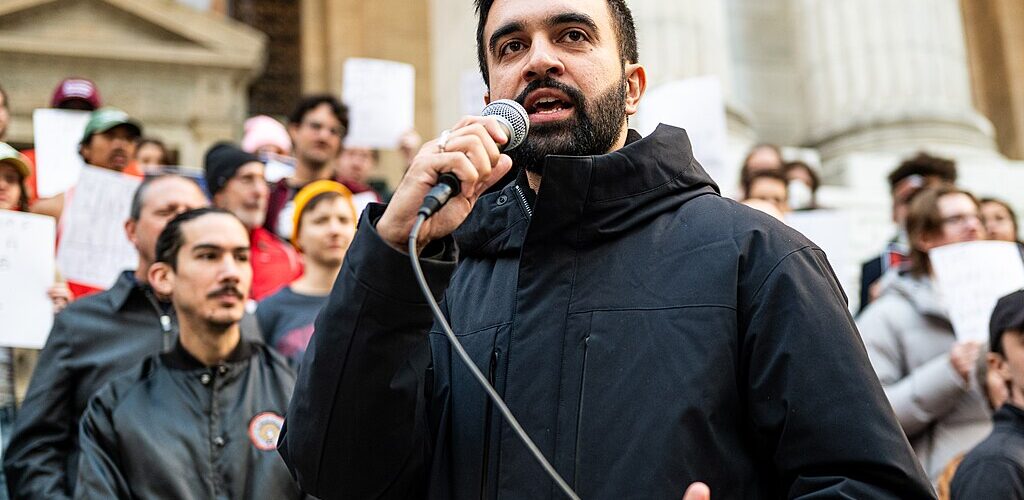
The elections earlier this month represented something of a political earthquake, and nowhere more so than in New York City where a 34-year old, self-described democratic socialist, Zohran Mamdani, rode a wave of discontent to victory in the city’s mayoral race.
It is certainly possible to overinterpret Mamdani’s victory. He won barely more than 50 percent of the vote against two of the most lackluster candidates imaginable. Mamdani himself is young, energetic, and ran a near flawless campaign. But there is no denying that he spoke to the hardships facing younger and low-income New Yorkers.
Despite the rhetoric surrounding his campaign, both his supporters and opponents are liable to be disappointed by how he actually governs the city. New York is not on the road to becoming either a socialist paradise or a socialist hellhole. There are several reasons to be skeptical of massive change.
First, the mayor’s office has limited power to enact more radical proposals. For one thing, he simply won’t have the money. Mamdani has promised to fund a long list of programs, benefits, and subsidies by “taxing the rich.” But a mayor cannot raise most taxes—in particular income taxes—without permission from the state legislature and the governor. And New York Governor Kathy Hochul, who faces reelection next year, has made it clear she is firmly against any tax hikes. At the same time, the Trump administration may be parsimonious with any federal assistance. Federal funds currently account for 6.4 percent of the city’s budget. And if Mamdani’s class warfare rhetoric drives wealthy New Yorkers to relocate out of the city, that will end up costing the city a substantial amount of its existing revenues.
Second, Mamdani will have to deal with a diverse and fractious city council, many members of which are not on board for the full Mamdani. He will have to deal with other independent boards and commissions as well. Mamdani may want free buses, for example, but he will have to convince a 23-member transportation board, only four of whom can be appointed by the mayor with the governor’s acquiescence. Rent control requires buy-in from the Rent Stabilization Board, who tend to be supportive of such measures, and Mamdani has broad appointive powers in that regard. President Trump may have thoroughly cowed Republicans in Congress, but New York politicians are unlikely to be as accommodating.
The limits on Mamdani’s power are generally a good thing since many of his proposals would be a disaster for the very low-income New Yorkers he champions. Consider just a few of his campaign promises:
- Rent control: Rents, as we were once famously told, “are too damn high.” But rent control may be the dumbest economic idea since Donald Trump discovered tariffs. Housing is expensive in New York, and elsewhere, because there’s not enough supply to meet the demand, and it’s only going to get worse. Estimates suggest an additional 560,000 units will be needed by 2030. Yet, study after study has shown that rent control discourages construction of new units making the shortage worse. Those who currently live in rent-controlled apartments benefit, often with high incomes, and are encouraged to stay in those apartments at the expense of those looking for a place to live. In addition, rent control can discourage landlords from upkeep and improvements, leading to deteriorations in existing stock.
- Free buses: Of the many “free” services Mamdani has promised New Yorkers, free buses seems to be low-hanging fruit. But nothing is as easy as it seems. Evidence from other cities that have attempted free transit suggests that there are significant tradeoffs. The plan is estimated to cost as much as $600-800 million per year. Even if Mamdani were to get some of his tax hikes, there will almost certainly be less money available for maintenance, upkeep, and modernization of the bus fleet, which is currently plagued by mechanical failures and is generally rated as one of the slowest services in the country. Low-income passengers themselves say they want the city to invest in faster and more reliable transit service rather than eliminating fares. Moreover, free buses can attract a rowdier ridership or become de facto homeless shelters, making current ridership feel unsafe. This could, in turn, lead middle class and wealthier New Yorkers to abandon the system. This seems counterproductive if the goal is to encourage the use of more mass transit rather than less.
- Universal child care: Child care is both hard to find in many parts of New York and prohibitively expensive. A typical New York family spends a quarter of their income for child care. But Mamdani’s plan would do nothing to reduce those costs; it would just shift the costs to taxpayers. That would undoubtedly be a windfall for big institutional providers, but provide little help to the small, local operators that many parents prefer. Indeed, Mamdani’s proposals appear to lean-in to the regulations and restrictions that help drive up child care costs. That’s one reason why Mamdani’s plan is expected to cost more than $6 billion annually.
- Raise minimum wage: Although scholarship around the impact of minimum wage hikes has grown murkier in recent years, the overwhelming consensus among economists remains that there is a tradeoff between increasing income for some workers and decreased employment opportunities for others. Those most likely to lose jobs are low-wage workers with the least training, fewer skills, and less attachment to the labor force. Even if small increases in the minimum wage might have only a minor impact on businesses and employment, few economists believe that businesses, particularly small businesses, can absorb Mamdani’s call to nearly double it, from $16.50/hour today to at least $30/hour by 2030, with automatic increases thereafter. If policymakers are worried about the impact of AI and automation on jobs now, just wait for high wage floors. Beyond employment effects, a minimum wage hike is liable to increase prices, especially for those small neighborhood businesses used by low-income New Yorkers: from fast food outlets and dry cleaners to movie theaters and pharmacies. As FREOPP research has shown, inflation tends to fall heaviest on low-income workers. And Mamdami’s minimum wage hike would be highly inflationary.
- Government grocery stores: Perhaps the most quixotic of Mamdani’s promises is his call for the city to build, own, and operate at least five grocery stores. Presumably Mandami believes that not-for-profit government stores charge less and thereby save consumers money. But grocers, especially discount chains, already operate on a profit margin of two percent or less. There isn’t a lot of money to squeeze out. At the same time, private grocers are able to keep costs down through the use of complex supply chains and volume purchasing that city-owned stores are unlikely to be able to replicate. Government grocers in other cities have proven to be financial sinkholes. To the degree that city grocery stores do compete with the private sector, they are most likely to hurt small neighborhood bodegas that are central to community life.
If Mamdani’s solutions are flawed or worse, at least he understands that the status quo is not working for too many. Lower-income Americans are struggling. The cost of living is too high. The housing crisis is real. Schools fail too many low-income students. There is an opportunity gap that is leaving too many behind.
The answer to these problems does not lie with either Mamdani’s brand of democratic socialism nor Trump’s state capitalism. Free markets, limited but effective government, individual liberty, and technology offer a better route out of poverty and towards self-sufficiency and human flourishing. But unless policymakers are willing to speak with compassion to those left behind and to address the problems they face, we will see more Mamdanis on the horizon.