


This post below is an extenstion of a newsletter that originally appeared on the FREOPP Substack.
Two stories broke last week that, taken together, embody an ideological divide at the heart of so many debates in America: people’s belief in the chief drivers of prosperity and well-being.
The first: more than four million Americans have been moved off food stamps—the Supplemental Nutrition Assistance Program (SNAP)—since expanded work requirements took effect under last summer’s One Big Beautiful Bill Act. The second: Elon Musk became the world’s first trillionaire when SpaceX debuted on NASDAQ, its shares opening at $135 and surging higher.
The reactions to each story have been almost perfectly symmetrical. Progressive critics condemned the food stamp decline as evidence of cruelty and condemned Musk’s wealth as evidence of greed. And, in doing so, they made plain the underlying premise of their entire worldview: that prosperity is a fixed pie, that wealth held by one person is necessarily taken from another, and that government must therefore confiscate and redistribute enough of it to set things right. That premise is wrong, and this week’s most tangible and human stories prove it.
What the SNAP numbers actually tell us
Let’s start with food stamps. Progressives have framed the four-million-person decline as a catastrophe, as though every one of those individuals was snatched from the dinner table by a heartless bureaucracy. But that framing collapses the moment you ask a simple question: why did they leave?
People exited SNAP for one of two reasons. Either their earnings increased—wages rose, a job came through, a household stabilized—which is unambiguously good news. Or they declined to meet a basic requirement: to work, look for a job, or volunteer part-time for at least 80 hours per month.
In the latter case, the correct moral and fiscal response is exactly what happened. A safety net is meant to be a hand up during hard times, not a permanent subsidy for able-bodied adults to opt out of contribution altogether. Reasonable people can debate the contours of work requirements—and there are real questions about implementation, about those with disabilities or caregiving burdens, about whether job opportunities genuinely exist in every community—let alone that work requirements alone are woefully insufficient welfare reform. FREOPP has long argued for extensive safety net reforms along with education and workforce development reforms. But the core principle is not controversial to most Americans: if a person is able-bodied and able to work, society’s obligation is to help them find work, not to fund indefinite inactivity.
The work requirement is, at its heart, a statement about human dignity. It reflects the belief that earned success—contributing something of value to the world and providing for oneself and one’s family—is not just an economic transaction, but a moral good. Research has consistently shown that work is among the most powerful drivers of well-being: physical health, mental health, social connection, purpose. Often without realizing it, the progressive critics who decry work requirements as punitive have embraced a vision of the human person that is actually quite diminishing: one in which the highest aspiration government can offer struggling Americans is a permanent check.
SpaceX and the economics of envy
When SpaceX’s IPO closed on Friday, Elon Musk’s net worth crossed $1 trillion. Progressives barely waited for the closing bell. New York City Mayor Zohran Mamdani took to social media to demand higher taxes on the rich. Democratic politicians from coast to coast invoked the number as a symbol of inequality run amok. Left Voice, a socialist publication, called the milestone “a morbid symptom of capitalism.” A U.S. Senate candidate vowed to make Musk “the last” trillionaire.
What was missing from virtually all of these reactions was any serious engagement with how that wealth was created or who else benefited from it.
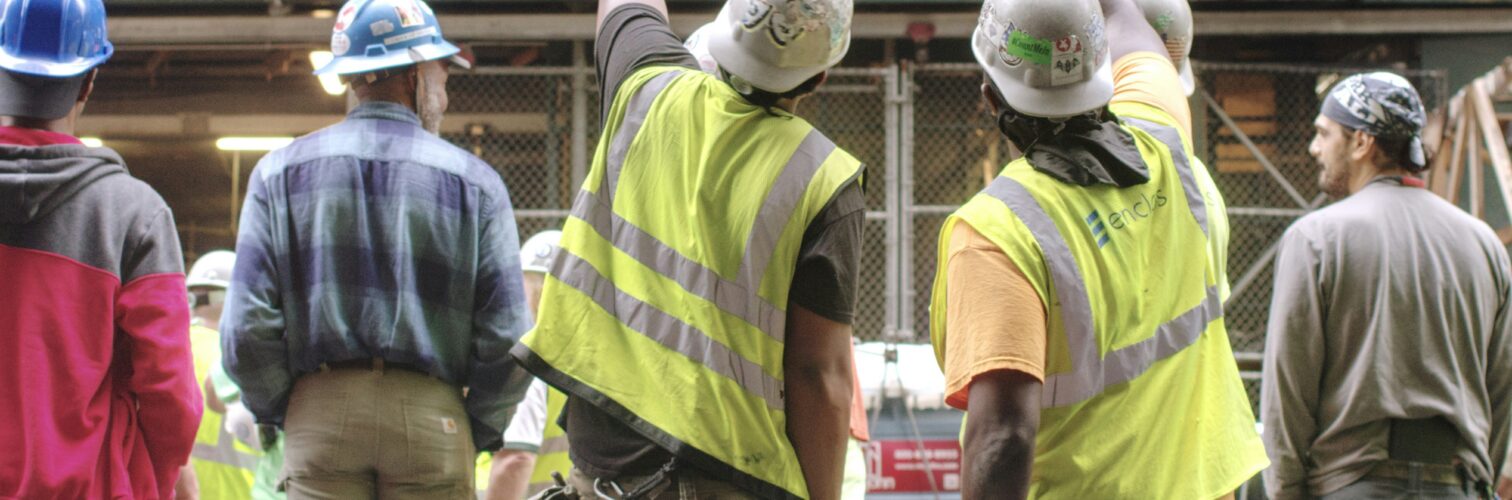
The SpaceX IPO was one of the biggest employee wealth-creation events in history. More than 4,400 current and former employees are expected to cross into millionaire status as a result. These are not hedge fund managers or software executives. They are machinists, technicians, welders, and manufacturing specialists: the kinds of workers progressives claim to champion.
Consider Juan Hernandez, who was profiled in the Wall Street Journal. He came from Mexico, never having heard of SpaceX, and took what he described as “just another contract job” at $28 an hour as a welder in 2015. When he went full-time, the company offered him $10,000 in stock. He bought more shares with every paycheck for the next decade. When SpaceX debuted last week, his roughly 6,500 shares were worth more than $1 million. He is now teaching his three kids how to invest. If he could say one thing to Musk, Hernandez told CBS News, he would say thank you. “He made it a possibility for somebody like us, you know, the cook or… the electrician. He’s making all these lives much better and meaningful for their families as well.”
That sentence contains more economic and moral wisdom than every wealth-tax proposal currently circulating in Congress.
And it isn’t just the 4,400 new millionaires. Musk—who, to be clear, is a complicated figure whose business practices are far from above criticism—has founded companies that have collectively created tens of thousands of high-paying jobs in manufacturing, engineering, and logistics. Like countless other companies in America, Tesla, SpaceX, and their supply chains have produced an economic ecosystem that extends well beyond their own walls and into the factory floors and machinist shops of middle America. The SpaceX IPO will also ripple outward through the 401(k) accounts and index funds of millions of ordinary working Americans. When entrepreneurs build things of genuine value, the gains do not stay contained at the top.
That is the part the wealth-confiscation crowd cannot bring itself to acknowledge: Musk did not take his trillion dollars from anyone. He created it, in the process hiring workers, solving problems, and building things that didn’t exist before. When governments tax away the incentive to do that, they don’t make more Juan Hernandezes. They make fewer of them.
The two visions
What these two stories share—the food stamp debate and the trillionaire backlash—is that they illuminate, with unusual clarity, the contest between two radically different philosophies about where human flourishing comes from.
One vision holds that well-being is dispensed from above. In this view, prosperity is essentially a resource-allocation problem: government must collect it from those who have too much and distribute it to those who have too little. The solution to poverty is a larger check. The solution to wealth is a larger tax. Government is the engine; everyone else is a passenger.
The other vision—the one at the heart of FREOPP’s mission—holds that well-being rises from the bottom up, created by free individuals who serve one another, by families who raise their children with the right values, by communities that look out for their neighbors, and by entrepreneurs and innovators who solve real problems and create real opportunity in the process. In this view, Juan Hernandez’s story is not an accident or an exception. It is the system working as it should. It is what happens when individuals are free to take risks, when companies are free to reward contribution, and when the conditions exist for ordinary people to build something that outlasts them.
Critically, this bottom-up vision recognizes forms of value that government is incapable of producing: the dignity of earning one’s own way, the bonds forged in a community that cares for its own, the purpose that comes from contributing to something larger than oneself. No government program has ever replicated what Juan Hernandez experienced standing on that factory floor, knowing that the company he helped build was going to the moon—and that he owned a piece of it.
This is not a case against government. Government has vital and limited roles: to protect rights and freedoms, to create the policy conditions in which free people can thrive, and to maintain a genuine safety net for those who truly cannot provide for themselves. What this post is a case against is the confusion of that limited role with a comprehensive one: the belief that government is, or can be, the primary source of human flourishing. When people believe that, they support policies that trap people in dependency rather than pathways to independence; they treat work requirements as cruelty rather than dignity; and they view the creation of 4,400 new millionaires as evidence of failure rather than success.
A recommitment at 250
This year, America celebrates the 250th anniversary of its founding. That founding was built on a radical and enduring proposition: that the purpose of government is not to give us our livelihoods, but to protect the freedom to live them. The Declaration of Independence and the Constitution were not blueprints for a managed welfare state. They were a framework for ordered liberty: one that trusted free people, free markets, free communities, and free families to drive progress and create prosperity in ways no central authority ever could.
That framework is what turned a collection of coastal colonies into the most prosperous, innovative, and upwardly mobile society the world has ever seen. It is why Juan Hernandez could arrive as an hourly contractor and become a millionaire. It is why, for all our warts, America remains the destination of choice for people who want a shot at building something.
FREOPP’s mission—to uplift Americans on the bottom half of the socioeconomic ladder through free enterprise and individual liberty—is, at its core, a commitment to that founding insight. Our challenge is defending these principles when they are attacked, applying them in the areas where they are lacking, and making sure that the gains of a free economy reach the people who need them most.
The 250th anniversary is not a moment for nostalgia, it is a moment to recommit. The ideas in our founding documents are not relics. They are the answer to the question of how a nation built on freedom can remain worthy of it.